
The most common cause is gum disease, which starts with plaque buildup along the gum line. Other causes include brushing too hard, genetics, teeth grinding, tobacco use, hormonal changes, certain medications and low vitamin C. Receding gums do not grow back on their own, but a dentist can stop them from getting worse and repair the damage.
Many people only notice gum recession when their teeth look longer or hot and cold drinks start to sting. The change is slow, so early signs are easy to miss. This guide explains the main causes, which medications and vitamin shortages may play a part, how to spot the signs, and which treatments help.
What Are Receding Gums?
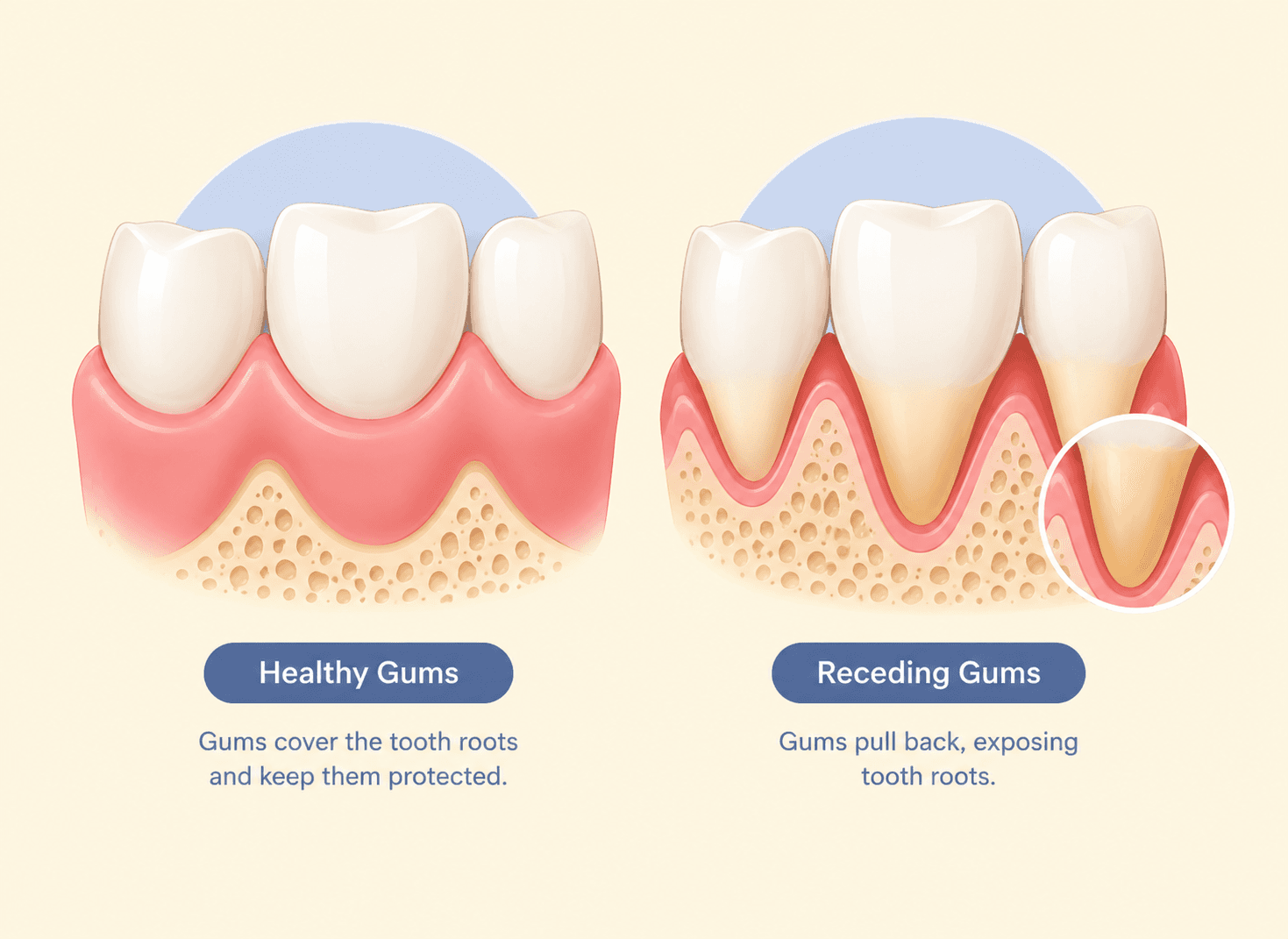
Receding gums, medically known as gingival recession, occur when gum tissue moves away from its normal position around a tooth, exposing more of the tooth or its root.
Healthy gums protect tooth roots and support overall oral health. When gums recede, exposed roots become more vulnerable to sensitivity, decay, and damage.
Gum recession can affect a single tooth or several teeth and may develop gradually without noticeable pain. Unlike temporary gum inflammation, lost gum tissue generally does not grow back naturally.
Recognizing gum recession early allows a dentist to identify the underlying cause and recommend treatment before the condition progresses. Understanding how to remove plaque from teeth through proper brushing, flossing, and regular dental cleanings can also help prevent gum disease and reduce the risk of further recession.
What Causes Receding Gums? 8 Common Causes
Gum recession can develop from several factors, including poor oral hygiene, brushing habits, and certain dental conditions. Understanding what causes gums to recede can help you identify potential risks and protect your oral health.
Gum Disease and Periodontitis
Gum disease is a major cause of receding gums. When plaque bacteria trigger persistent inflammation, the tissues supporting your teeth can become damaged. Advanced gum disease, called periodontitis, may lead to gum recession and bone loss.
Brushing Too Hard
Aggressive brushing, especially with a hard-bristled toothbrush, can gradually damage delicate gum tissue. Using gentle pressure and a soft-bristled toothbrush helps reduce this risk.
Plaque and Tartar Buildup
Poor oral hygiene allows plaque to accumulate around the gumline. If plaque hardens into tartar, it becomes difficult to remove without professional cleaning and can contribute to gum inflammation and periodontal disease.
Genetics and Thin Gum Tissue
Some people naturally have thinner or more delicate gum tissue, making them more susceptible to recession even with consistent oral hygiene.
Smoking and Tobacco Use
Tobacco use increases the risk of periodontal disease and interferes with normal gum healing, potentially contributing to gum recession.
Misaligned Teeth and Orthodontic Factors
Teeth positioned outside their supporting bone may have thinner surrounding gum tissue. Certain orthodontic movements can increase recession risk in susceptible patients.
Teeth Grinding and Gum Trauma
Teeth grinding may place excessive forces on teeth, although its direct role in causing gum recession remains uncertain. Repeated physical trauma can also damage gum tissue.
Lip or Tongue Piercings
Oral jewelry can repeatedly rub against nearby gums, causing irritation and localized tissue damage that may eventually lead to recession.
What Medications Cause Receding Gums?
No common medication directly makes gums recede, but some drugs raise the risk by causing dry mouth or changing gum tissue. The effect is usually indirect, so it helps to know which kind of drug you take.
Dry-mouth medications
Saliva washes away plaque and bacteria. Some antihistamines, antidepressants, diuretics, blood pressure drugs and opioids reduce saliva, which makes gum disease, and then recession, more likely.
Gum-overgrowth medications
Some anti-seizure drugs (such as phenytoin), immunosuppressants (such as cyclosporine) and calcium channel blockers (such as nifedipine) can make gum tissue swell and grow over the teeth. The overgrown tissue traps plaque, and treating it can lead to gum problems later.
Do not stop or change any medicine on your own. Tell your dentist which medications you take, and consult your doctor before making changes. Good brushing, flossing, and regular dental cleanings help maintain gum health. Understanding what orthodontics is and how tooth alignment affects gum health can also help you recognize other factors that may contribute to gum recession.
What Vitamin Deficiency Causes Receding Gums?
Vitamin C deficiency has the clearest link to gum problems, while low vitamin D and calcium are tied to gum disease more indirectly. No vitamin shortage alone causes receding gums, but poor nutrition can make the gums weaker and slower to heal.
Vitamin C
It helps build collagen, the protein that keeps gum tissue firm. A severe shortage causes scurvy, which leads to swollen, bleeding gums and loose teeth. Severe deficiency is uncommon, but low intake can still affect gum health.
Vitamin D and calcium
Both support the jawbone that holds your teeth. Low levels are linked to a higher risk of gum disease, which can lead to recession.
Evidence for taking supplements to treat receding gums is limited. Eating a balanced diet with fruit, vegetables and dairy or fortified foods helps, but it does not replace dental care. If you suspect a deficiency, ask your doctor for a blood test before taking supplements.
What Are the Early Signs of Receding Gums?
Gum recession often develops gradually, making its early symptoms easy to overlook. Recognizing changes in your teeth and gums can help prevent further damage.
Common signs of receding gums include:
Longer-looking teeth
Teeth may appear longer as the gumline moves away from its original position.
Tooth sensitivity
Exposed tooth roots can cause discomfort when consuming hot, cold, or sweet foods.
Visible tooth roots
Yellowish root surfaces may become noticeable near the gumline.
Uneven gumline
Some teeth may have visibly less gum coverage than others.
Bleeding or swollen gums
These symptoms may indicate underlying gum disease rather than recession itself.
If you notice these warning signs, schedule a dental examination to identify the cause and prevent further gum tissue loss.
Fixes and Treatments for Receding Gums
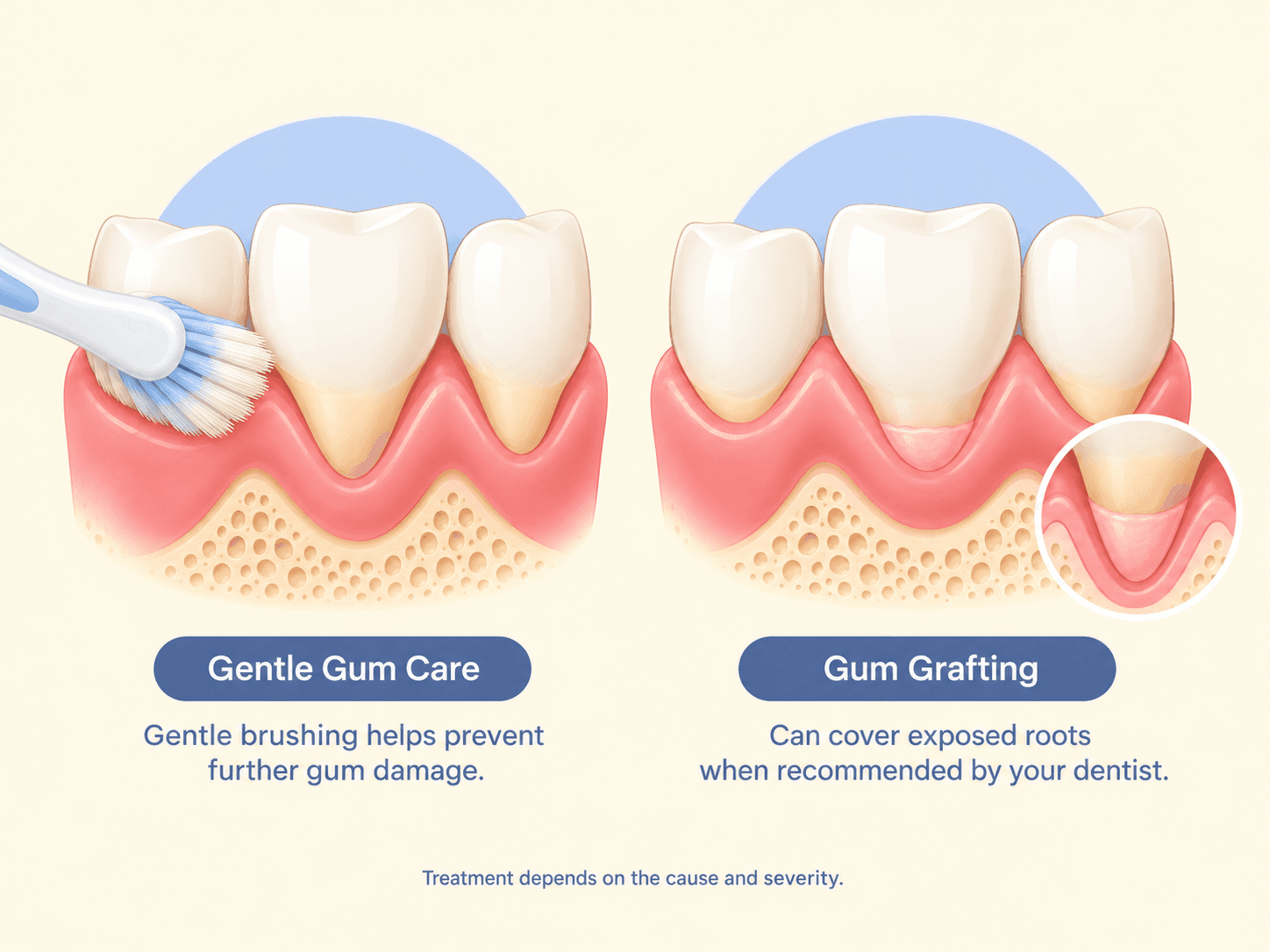
Receding gums cannot grow back on their own, but treatment can stop further loss and, in some cases, restore the gum line. The right option depends on how far the recession has gone and what caused it.
Mild recession
- Gentler brushing: Use a soft-bristled brush and light, circular strokes twice a day.
- Floss daily and clean between teeth to control plaque.
- Desensitizing toothpaste or fluoride products can ease sensitivity.
- Fix the trigger: A night guard for grinding, or stopping tobacco use, protects the gums from more damage.
Moderate recession
- Deep cleaning (scaling and root planing): A dentist or hygienist removes plaque and tartar below the gum line so the gums can reattach and heal.
- Bite or alignment correction: Orthodontic treatment can reduce uneven pressure on the gums.
Advanced recession
- Gum graft surgery: A periodontist covers exposed roots with tissue taken from another area, usually the palate.
- Pinhole technique: A less invasive procedure that repositions existing gum tissue through a small opening. It is not suitable for everyone.
Can receding gums grow back? Not naturally. Gum tissue does not regenerate once lost, but surgery can cover exposed roots, and proper dental care helps keep the remaining gums stable. Dental clinics can also Explore Best Dental Software solutions to manage patient records, schedule follow-up appointments, and support ongoing gum health monitoring.
Prevention and When to See a Dentist
You can prevent most gum recession by brushing gently, cleaning between your teeth every day, and having regular dental check-ups. Small habits protect the gum line over many years.
Prevention tips
- Brush twice a day with a soft-bristled brush and light pressure.
- Floss or use interdental brushes daily.
- Quit smoking and avoid chewing tobacco.
- Wear a night guard if you grind your teeth.
- Eat a balanced diet with enough vitamin C, vitamin D and calcium.
- Book a dental check-up and cleaning about every six months, or as your dentist advises.
When to see a dentist
Make an appointment if you notice:
- Teeth that look longer or a notch near the gum line
- Ongoing sensitivity to hot or cold
- Red, swollen or bleeding gums
- Persistent bad breath
- Loose teeth, which need prompt attention
Early treatment is often simpler and more affordable than repairing advanced gum recession. Dental clinics can use DentalCore CRM to manage patient appointments and follow-up reminders, helping patients stay on track with preventive dental care.
Conclusion
Receding gums usually come from gum disease, rough brushing, genetics, grinding or tobacco use, and sometimes from medications or low vitamin C. The tissue does not regrow, so catching the signs early gives you the most options. Brush gently, clean between your teeth daily and keep up regular dental visits.
Need help turning patient education like this into a smoother clinic experience? Synfinity Dynamics builds software for dental clinics.
Keep patients on track for cleanings and checkups.
Manage appointments, recalls, and follow-ups in one place with DentalCore CRM built for dental clinics.
Start Your Free Clinic Workspace