
Plaque buildup can make your teeth feel sticky, cause bad breath, and increase your risk of cavities and gum disease. Wondering how to remove plaque from teeth safely? A consistent oral care routine can help you clear away soft buildup before it hardens into tartar.
The safest approach is to brush twice daily with fluoride toothpaste, clean between your teeth once a day, and maintain consistent dental care. Following these daily oral care practices helps clear away soft plaque before it turns into stubborn deposits.
Once the buildup hardens into tartar, only a dental professional can remove it safely using specialized cleaning tools. In this guide, you'll discover seven safe, effective ways to remove plaque, prevent buildup, and keep your teeth and gums healthy.
What Is Plaque, and How Is It Different From Tartar?
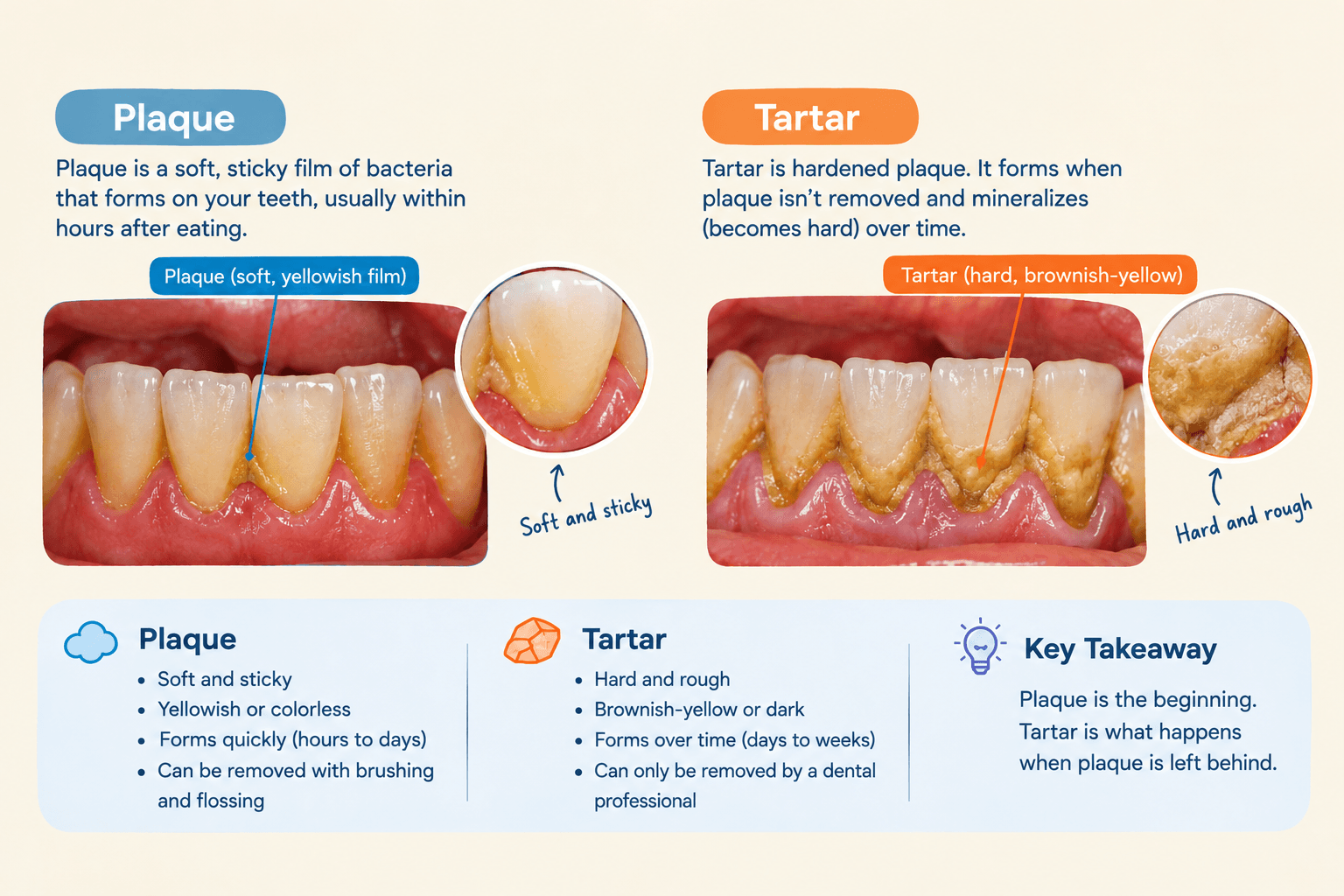
Dental plaque is a thin, sticky layer of bacteria that continuously develops on tooth surfaces, particularly around the edges where teeth meet the gums. It is colorless or pale yellow, which is why many people don't notice it until their teeth feel fuzzy. When you consume foods or drinks containing sugars and starches, plaque bacteria break them down and release acids that can gradually weaken tooth enamel and contribute to gum inflammation.
When plaque remains on your teeth, minerals in saliva can gradually turn it into tartar, also known as dental calculus, within a few days. These hardened deposits often appear yellow or brown, feel rough, and cannot be removed through regular brushing. Professional cleaning is necessary to remove them safely. For dental clinics, keeping patients on schedule for preventive visits is essential, and the right practice management tools can help. Our guide to Best Dental Software: A Complete Guide for Modern Clinics explores how digital solutions can support appointment scheduling, patient records, and follow-up care.
| Feature | Plaque | Tartar (calculus) |
|---|---|---|
| Texture | Soft, sticky, fuzzy | Hard, rough, crusty |
| Color | Colorless to pale yellow | Yellow to brown |
| Removal at home | Yes, with brushing and flossing | No, needs professional scaling |
| Main risk | Cavities, gingivitis | Gum disease, deeper buildup |
7 Safe Ways to Remove Plaque From Teeth
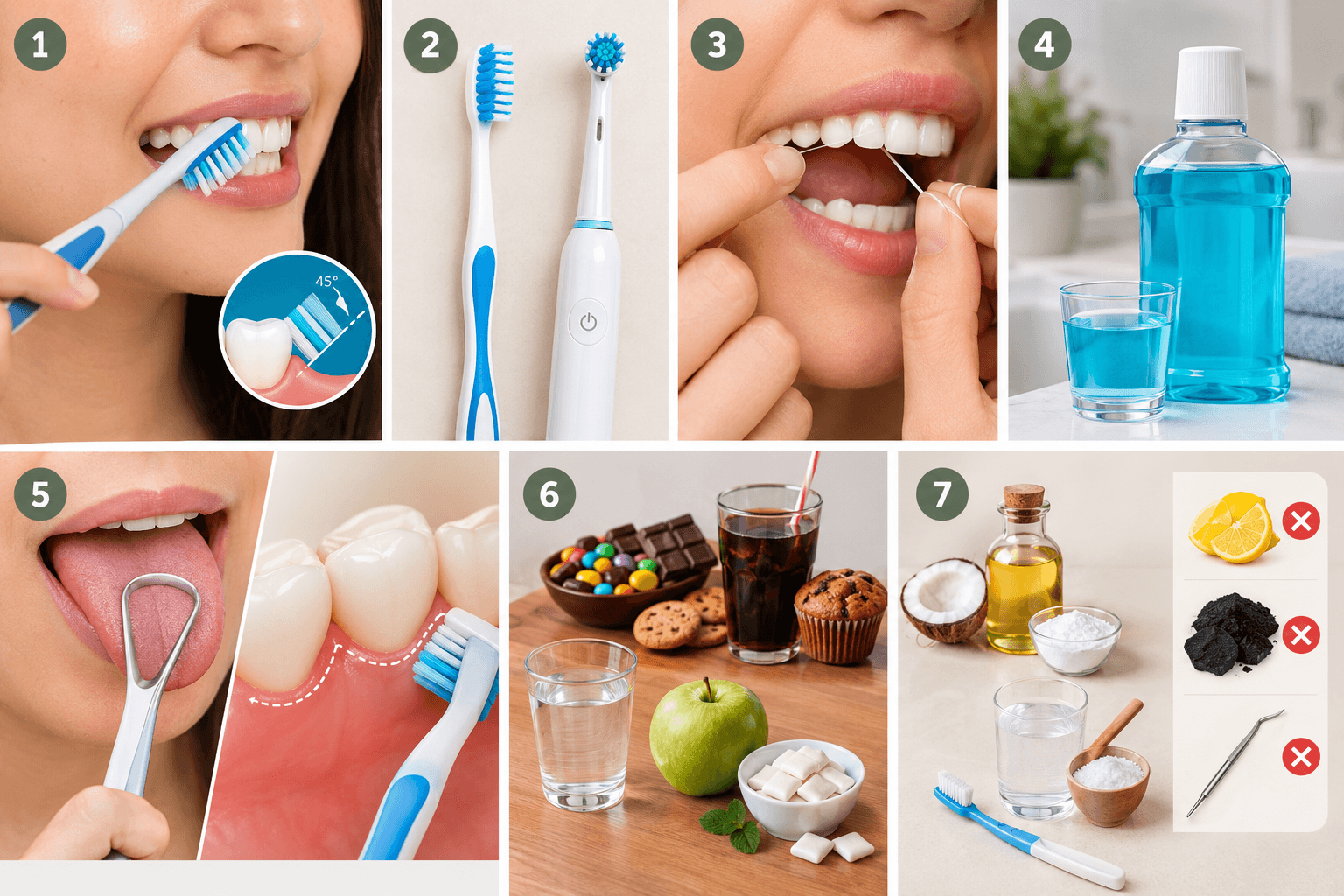
These seven habits show you how to remove plaque from teeth at home without damaging your enamel. Together, these cleaning methods help remove plaque from tooth surfaces, between teeth, and along the gumline.
Brush Twice Daily for Two Minutes With Fluoride Toothpaste
Regular brushing helps clear away plaque before it builds up on your teeth. Brush every morning and before bed for at least two minutes using fluoride toothpaste and a soft-bristled toothbrush. Position the bristles at a 45-degree angle toward your gums, then gently move the brush in small circular motions to clean the front, back, and chewing surfaces of each tooth. Scrubbing harder doesn't remove more plaque and can irritate your gums.
Use a Soft-Bristle or Electric Toothbrush
Soft bristles clean plaque effectively without wearing down enamel or damaging gums. Many people find an electric toothbrush easier to use correctly, since the built-in timer and moving head do much of the work, and studies often show it removes more plaque than a manual brush. Change your toothbrush or electric brush head approximately every three months, or earlier if the bristles become worn, bent, or spread apart.
Clean Between Your Teeth Every Day
A toothbrush can't fully reach the tight spaces between teeth, which is where plaque often builds up. Clean between your teeth daily by wrapping the floss around each tooth in a C-shape and carefully moving it up and down, slightly beneath the gumline. If floss is hard to use, interdental brushes or a water flosser are good alternatives, especially for wider gaps or braces.
Use an Antibacterial or Fluoride Mouth Rinse
Mouthwash helps reduce bacteria and strengthens enamel, but it doesn't physically remove plaque. Mouthwash should complement your daily brushing and flossing routine, never replace these essential cleaning habits. Ask your dentist which type suits you, since some antibacterial rinses can stain teeth if used for a long time.
Clean Your Tongue and Gumline
Your tongue holds bacteria that can spread to your teeth. Gently clean it once a day with a tongue scraper or your toothbrush. Pay extra attention to the gumline too, where plaque collects first. Gums that bleed when you clean them are an early sign of plaque buildup, so keep cleaning gently, and see a dentist if the bleeding lasts more than a week or two.
Cut Back on Sugary and Starchy Foods
Plaque bacteria feed on sugar and starch, then produce acid that attacks enamel. Limit sugary drinks and constant snacking, and drink water after meals. Chewing sugar-free gum after eating can also help by increasing saliva, which naturally washes away food particles.
Try Gentle Home Options, With Caution
Some people use oil pulling or salt-water rinses. The evidence for oil pulling is limited, so treat it as an extra, not a replacement for brushing and flossing. Salt water can soothe irritated gums but doesn't remove plaque. A small amount of baking soda is gentle enough, and many toothpastes already contain it. Avoid lemon juice, charcoal powders and scraping with sharp tools, which can damage enamel. No home remedy can remove tartar.
How to Remove Tough Plaque From Teeth: When to See a Dentist
If you're wondering how to remove tough plaque from teeth, first determine whether the buildup is soft plaque or hardened tartar. Plaque can be removed through daily brushing and flossing, but once it hardens into tartar, home cleaning methods are no longer effective.
Tartar often appears as yellow or brown deposits near the gumline and may feel rough against your tongue. Professional dental scaling allows a dentist or dental hygienist to carefully clear away hardened tartar deposits using instruments designed for this purpose.
Visit a dentist if you notice:
- Hard deposits that don't disappear after brushing.
- Bleeding, swollen, or tender gums.
- Persistent bad breath despite regular cleaning.
- Gum recession or loose teeth.
Never try to remove tartar using sharp objects or DIY dental tools, as they can damage your gums and tooth surfaces. Hardened deposits require professional cleaning with appropriate dental instruments. For clinics, delivering this care efficiently also depends on organized appointments and patient follow-ups. Our guide on How to Optimize Dental Clinic Workflow explores ways to streamline daily operations while maintaining quality patient care.
Plaque Removal Mistakes You Should Avoid
Trying to remove plaque too aggressively can damage your teeth and gums. Even if you want quick results, avoid these common mistakes:
Scraping teeth with sharp objects
Using pins, metal tools, or DIY dental scrapers can injure your gums and damage tooth surfaces.
Using acidic home remedies
Lemon juice and vinegar can erode tooth enamel and are not safe plaque-removal treatments.
Brushing too hard
Excessive pressure or hard-bristled toothbrushes can irritate gums and contribute to tooth wear.
Relying only on mouthwash
Mouthwash may help control plaque bacteria, but it cannot replace brushing and interdental cleaning.
For safe plaque removal, stick to gentle brushing, daily cleaning between your teeth, and professional dental visits when necessary. Regular preventive appointments also help clinics maintain consistent patient care, but managing the administrative side is equally important. Our guide on How Dental Clinics Can Reduce Pending Payments explains how better billing processes and payment follow-ups can help dental practices run more smoothly.
How to Keep Plaque From Coming Back
Plaque starts re-forming within hours of cleaning, so consistency matters more than any single method. Brush twice a day, clean between your teeth daily, and keep sugary snacks to mealtimes. Drink water through the day, replace your toothbrush every three months, and avoid smoking, which encourages bacterial growth. Visit your dentist for a checkup and cleaning every six months, or as often as they advise.
Conclusion
Removing plaque comes down to a few daily habits: brush for two minutes twice a day, clean between your teeth, use mouthwash if your dentist recommends it, and limit sugary foods. These steps help remove soft plaque, but hardened tartar requires professional cleaning. Start with the basics today, and book a dental visit if you notice rough deposits or bleeding gums.
For dental clinics, keeping patients on track with regular checkups and cleanings is just as important. DentalCore CRM helps dental practices manage patient records, appointments, and follow-ups in one place.
Looking to build similar dental clinic management software? Synfinity Dynamics provides custom software development services to help businesses create solutions tailored to their workflows.
Keep patients on track for cleanings and checkups.
Manage appointments, recalls, and follow-ups in one place with DentalCore CRM built for dental clinics.
Start Your Free Clinic Workspace